 The Average Learner

*This article is mainly a review of the book “The Next Factory Of The World - How Chinese Investment Is Reshaping Africa - by Irene Yuan Sun”
Intro
Before I read this book, every time when I hear the word Africa, in my perception it would be dark skinned people standing in the desert. Little do I know in-depth about their countries, or even what are the major countries on the continent. In the meantime, I also wondered why is it that China and Japan had advanced so much in the past few decades and yet, Africa on the other hand seems to be lacking behind so much?
This book has freshened up my knowledge about Africa, the problem it has been facing and how Chinese businessmen are helping the continent out for the industrial development even if it’s for their own profits.
Why is Africa The Next Factory of The World
Flying Gees Theory
The author based her viewpoint on the Flying Gees Theory.
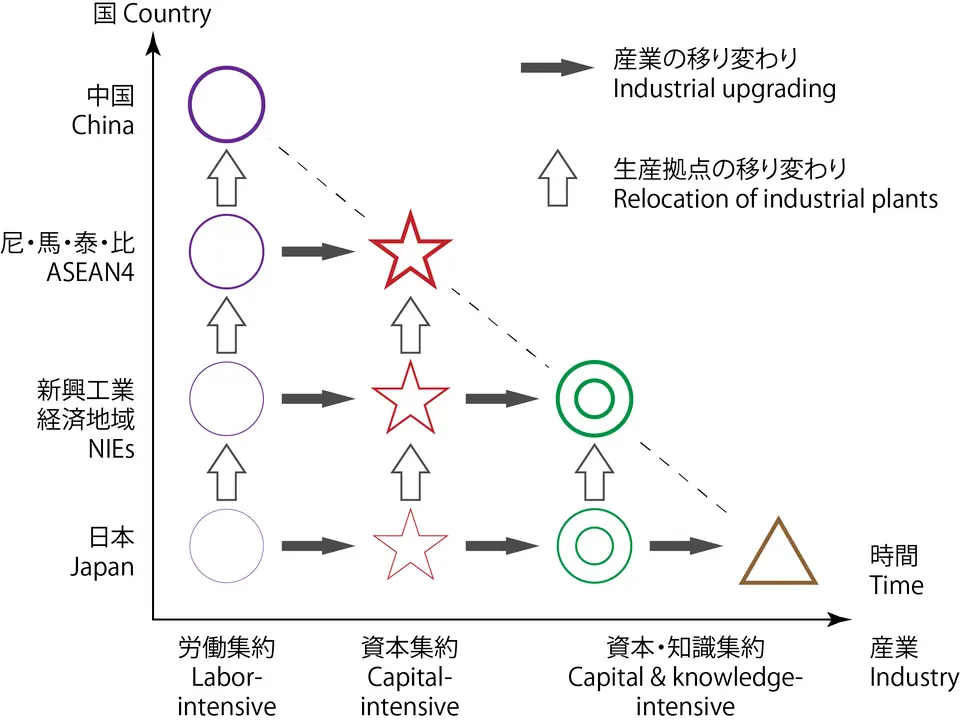 *Image credit: By Banku - Own work, CC0, https://commons.wikimedia.org/w/index.php?curid=24793439
Remember how countries like China and Japan once were? Their factories were highly labour intensive. At first, they started with manufacturing low technology products such as garment, steel, etc. Then, they gradually advanced to making TVs, HDTV, and so on as the decade went by.
This theory imply that Africa can grow just like China and Japan once were decades ago. Especially now, when China, Japan, and rest of the world has pretty much grew in labour costs, it makes more economical sense to move the production to a more low labour costs continent, Africa.
Major Factories in Africa
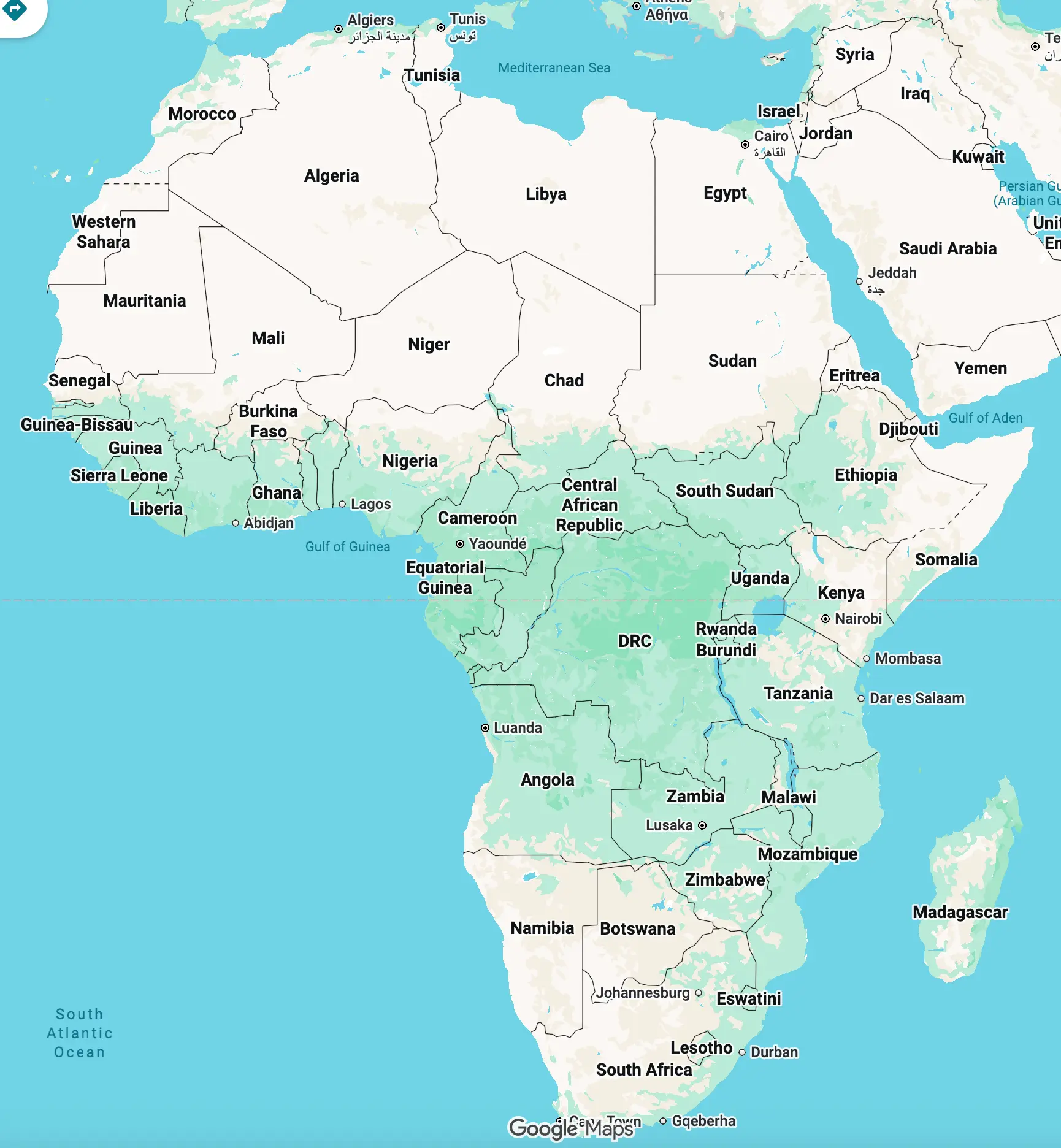 *The map of Africa.
The book has a focus in 4 countries in particular: Kenya, Lesotho, Nigeria, and Ethiopia. And each country has a focus in different produce. For example, Ethiopia has large textile and garment industry. Lesotho has factories that are the main manufacturers for well-known brand like Levi, Walmart, Kohl and Reebok, etc. Nigeria produce ceramic tile and flip-flops for local markets.
Why Foreign Investment From China is Important
Bring in Skills
China has a history of technology advancement and manufacturing improvement. By bringing in the knowledge and the Chinese way of manufacturing, it can make the factories in Africa more efficient.
Provide Jobs
By increasing the presents of foreign investment like Chinese business owners. It can provide more local jobs to improve the lives of many African. There’s a research that contains a sample size of 1000 Chinese firms employs more than 300,000 workers and 89% of them are Africans.1. Also, The longer a Chinese firm exist, the higher proportion of local hires.
Improve The Living Hood of The Locals
By providing a corporate ladder for African worker, Chinese bosses entrust them the longer they work with them. Even though most Chinese businessmen are profits driven, the author has a tingling sentiment of thinking that her teaching role in Africa actually can’t do much for the local kids future as much as those businessmen can.
Why isn’t Africa Advanced Already
There are a few factors at play.
Corruption
The book mentioned a case where two Chinese businessmen started a successful company in Africa yet because it touched the profit from local resources which tied to local gang and got warranted by the local police.
Lacking The Knowledge
Africa has the lowest literacy rate in the world2. Most of them rather do factory job to make ends meet as soon as possible than studying for an unknown future as Africa in a whole is not well-developed and technology demanding continent. However, there’s a local woman in Lesotho grew up studying medicine and later own her own capsule plant in Ethiopia. So, it is possible, but it is still like one in a thousands.
Poor Fire Service
The book mentioned almost all Chinese business owner in Africa had fire accidents happened in their factory at some point. The common result, however, because of the very slow response time from the fire department, they can do nothing but accept the lost. This is not a main factor but worth mentioned as it reflected the current state of the countries development.
African Are Lazy (false claim)
As the book pointed out, many Chinese businessmen pointed out that the local workers are lazy. Partly, it could be overt racism. According to the Chinese business owner the author had interviewed, the local workers don’t show up to work regularly, when they do, they were wearing flip-flops even if they were instructed to wear steel caps, and their reason being: I just don’t want to.
There an interesting counter viewpoint the author made regarding this statement. She said the same argument happened between English and German back in the 18s century too. Where the receiving country (Africa) has no or not long prior history of industrialisation like China has3. Therefore, the locals doesn’t have the same worker mentality built-in to their mind yet. Also, foreign investors are accustomed to the working style of their own people. In this case, Chinese businessmen in Africa are still more familiar and prefer the Chinese working style instead of the locals (African).
The Lack of Domestic Goods
One major example is that Africa relied heavily on importing medicines from the West as they are not technologically advanced enough to make it domestically. Yet, HIV/AIDS are still to this day the biggest health issue in Africa. Although most of them are actually treatable with modern medicine, Africa doesn’t produce their own HIV/AIDS medicines. Which lead them to a dilemma of either trying to produce it themselves or importing them.
On the other hand, the Western policy do aids Africa by giving what they need. In order words, giving the medicines to combat HIV/AIDS and ship it to Africa.
This sounds good and all for “giving them what they need”, but it is also the reason why the continent is not advancing, because they see no incentive to try to produce it themselves. Making it themselves instead of receiving free solution means huge investment in both time and money to develop it domestically. The author used the drowning kid puzzle analogy4 to support her point, argued that only fixing the underlying issue can combat long-term issues.
Last Words
I have about at least 6-7 words per page that I didn’t understand while reading this book as I’m not a English native, and the writer is a Harvard graduate which may contributed to that as well. However, as challenged as it might be, this book did brought me to a new understanding of the real situation the current Africa is in. And the interesting dynamics in how Chinese businessmen intertwine with local development.
Apart from the knowledge, I did jotted down all the unfamiliar words from the book, planning to learn and memorize all of them via a flashcard app.
There are just so much to learn in books.
Extras
Why Automation Cannot Rule Out Africa Labour Intensive Manufacturing Nature
Orders from overseas like garments production requires humans to be able to adapt to often changing styling daily. It is uneconomical to tune the machines daily or to make such machines just to fulfill an order.
Industrial Producing Competitions
In Kenya, there are competitions where Africans can get potentially cash prize, scholarship for a Master degree in China, and production deals.
Quotes
- Mistakes are data that aid learning.
Reference:
Footnotes
-
Page. 92 of The Next Factory of The World ↩
-
Page. 95 of The Next Factory of The World ↩
-
Page. 99 of The Next Factory of The World ↩
-
Page. 99 of The Next Factory of The World - The drowning kid analogy is a Harvard Kennedy School puzzle. it goes like: One day, on your way to work, you saw a kid is drowning by the river, will you stop and save him? The answer is obviously “Yes”, considered the emergency of the event. But, what if there’s always a kid drowning in that river everyday? Will you still stop every time and save them? This provoke the challenge of acknowledging of the emergency sense vary in frequency. ↩